Your cart is currently empty!
An exposition of the history and myth King Sebastian the First of Portugal
Part I
Chapter I
Having been invited to write an account explaining Sebastianism to the non-portuguese, I decided that I would try and explain it to the Australian people, in the hope that, by doing so, I would also be explaining it to everyone else in-between Portugal and Australia.
The task is so magnanimous that it becomes underwhelming for Sebastianism can’t really be explained and I am therefore unburdened by the weight of expectations. If by the end of this text you feel like you’ve understood what Sebastianism is, chances are that you don’t.
So here we go.
Chapter II
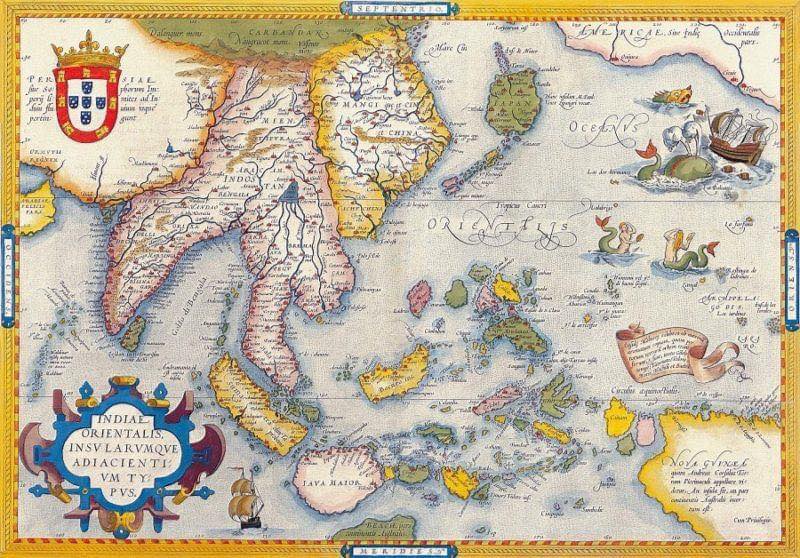
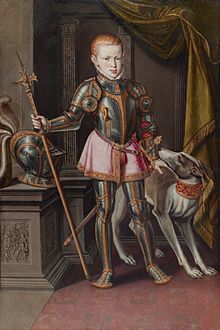
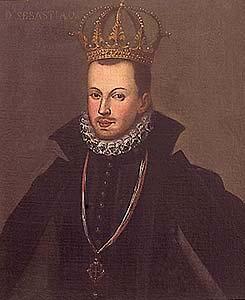
Sebastian, a Portuguese prince born in 1554, was the sole heir to one of Europe’s great ruling families. In those days Portugal had a vast realm of international settlements, colonies and diplomatic relations, allowing the nation to sit at the main table of world decision-making. This small kingdom had such influence that its language, Portuguese, was often used for the conduct of international business, just like English is in our days.
Chapter III
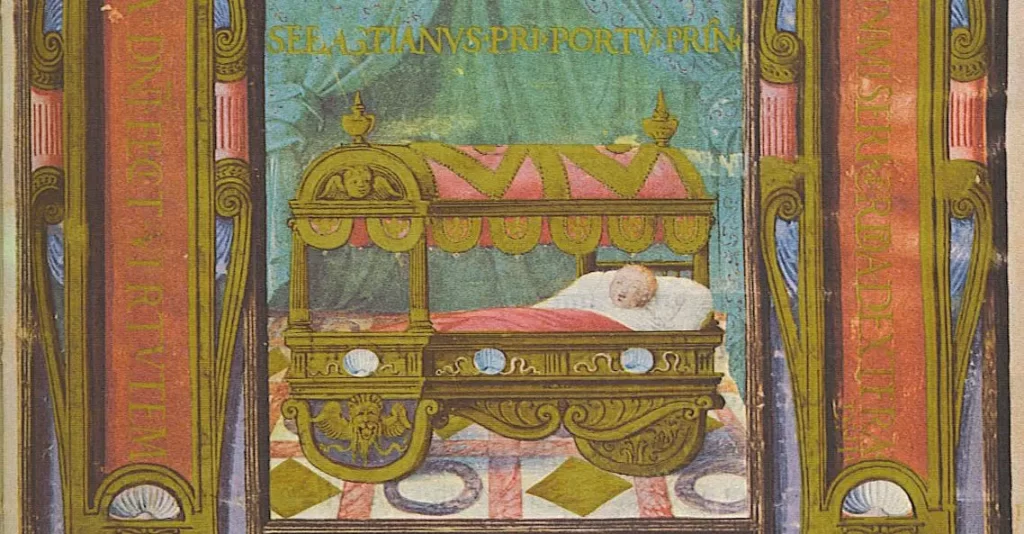
Sebastian’s father died 18 days before he was born. His mother abandoned him when he was only 3 months-old. His coronation happened when he was 3.
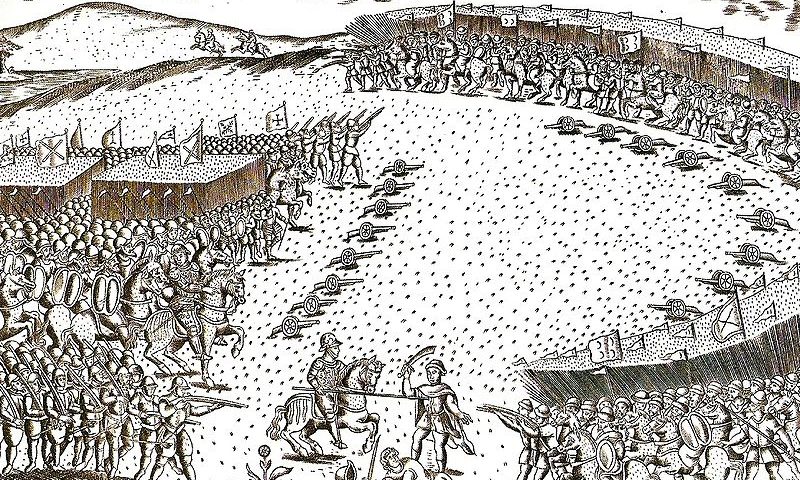
On August 4th 1578, 24 year-old Sebastian led his army to battle in Morocco and died. His father being dead along with Sebastian’s 5 uncles and 4 aunts there was no one left in the Portuguese lineage. In the power vacuum that ensued the Spanish king Filipe, Sebastian’s uncle, took over Portugal, plundering his neighbouring nation. Facing a difficult scenario the some among the Portuguese population hoped for the return of the rightful king, Sebastian, to take back the crown.
These people came to be known as sebastianists and their hope lasts to our days.
Chapter IV
Hoping for a return from the dead might come across as non-sensical. However, how often does it happen that things which at first appeared non-sensical come to appear to us not so when a new light is cast upon them…things which we didn’t believe in at first end up seeping in, penetrating into us to become core beliefs. Whilst the individual may have a tendency to repel that which he does not know, wouldn’t personal growth be impossible without a certain degree of assimilation of that which used to be foreign to us?
Is that the power of questioning?
Did Sebastian really die?
Chapter V
Perhaps he did fall in battle. Perhaps his death is duly ruled as “suicide by recklessness”. An irresponsible fool, raised without a mother or a father, crowned too young, arrogantly lusting for glory, Sebastian fell in a foreign land where he need not be, fighting a battle which need not be fought, dragging down his nation and his people with him. This came to be the official narrative which many believed and still believe to be true.
However…
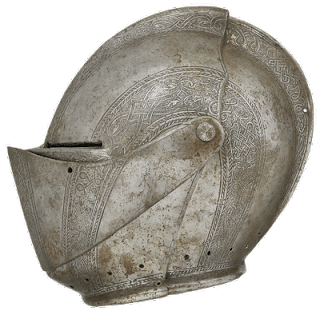
If Sebastian died, where was his body? His body was buried, allegedly, in Lisbon, in a state funeral organised by the Spanish authorities. However, the body spent 5 years in Morocco before being sent to Portugal so that the funeral happened 5 years after the battle. Right from that day people were suspicious of the provenance of the body. “If” it was Sebastian that was buried, then why has no researcher ever been allowed to run a DNA test, despite repeated requests over the years?
And what should we make of the accounts from soldiers who were on the battleground on that day and who claimed Sebastian didn’t die but rather left the battlefield, unscathed after the death of the enemy kings.
And who was the man making an appearance in Venice 20 years after the battle claiming to be Sebastian? A man who shared the same 17 birthmarks as Sebastian? A man with such accurate knowledge of private details of the life of Sebastian and of the workings of the Portuguese Court that he had the rulers of Venice convinced of his claim, so much so that Pope Clement VIII threatened the king of Spain with excommunication were the Portuguese Crown not returned to the rightful king.
But why would Sebastian leave, abandoning his army and his nation?
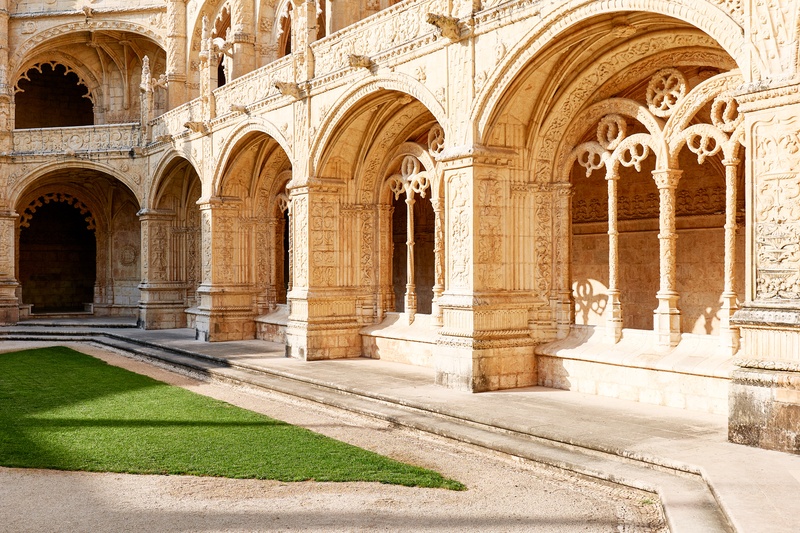
Chapter V
Was Sebastian incapable of facing the consequences of a colossal loss in the battle of Alcacer-Quibir?
Was Sebastian betrayed by his uncle, the Spanish King, who’d promised to send reinforcements to join the Moroccan campaign, reinforcements which never arrived? A Spanish King who knew too well of the prizes and secrets which could be added to his empire if Sebastian were to “disappear”? Did the Spanish King finance the traitors within the Portuguese ranks who tried to assassinate Sebastian from behind with grenades, during the battle?
It may be that Sebastian fled for his life from enemies and traitors on both battle fronts, death presenting itself under helmet and turban with sword and sabre flying the cross and the crescent…
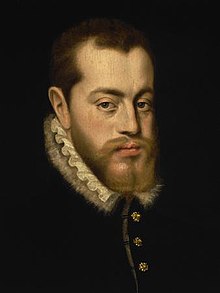
The kingdom became kingless.
Some hoped the king would return.
End of part 1
Part 2
Chapter VII
As the news of the loss of the battle began to arriving into Portugal, carried by foot and horse and sail…the news making its way throughout the kingdom, south to north, by mouth to ear and back.
As seven pretenders arose in France, Spain, Italy and Portugal, royal blood underwriting each of the seven claims to the throne…some more legitimate than others.
As the Spanish king took over Portugal by force.
As elitist and international vultures pulled apart the empire’s headless corpse…looting, wrecking and misusing treasures and secrets gathered over centuries, prizes which had been paid for dearly with the pain of the Portuguese seafarer and his family’s tears as interest.
As trade routes were hijacked, relationships were destroyed.
As the Portuguese fleet sailed to the depths of the Atlantic Ocean wearing its enemy’s flag.
But hope never faded.
Whether in faith or in denial, whether by intuition or by a process of questioning triggered by exposure to sources of information contradicting the official narrative…some still hoped.
Some still hoped…
For, at any minute, any second, He could arrive. He could be stepping foot on shore Right Now, brought home by any of the countless vessels that moored in Lisbon daily. Or perhaps, as a knight on horseback or a pilgrim on foot, he was crossing the border between Portugal and Spain, salvation following the trail of damnation.
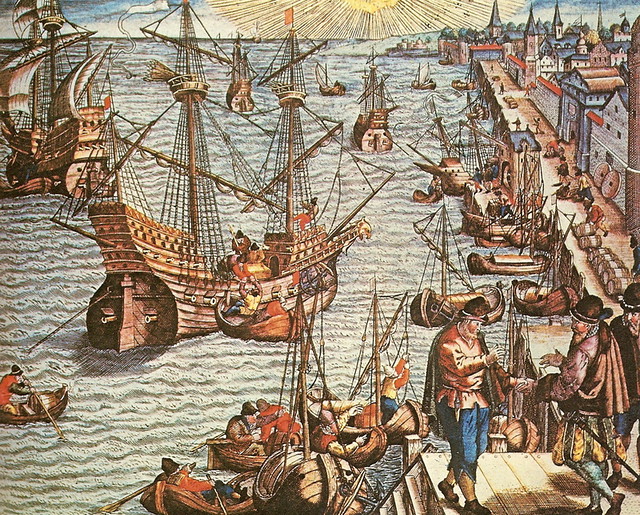
Sebastian, miracle remedy for all ailments, made more so by the fact that this one did not need to be drunk nor rubbed nor injected. Rather, his being need only be and be made known, his kingship realized (perhaps hope alone was enough to cure the blessed who believed without seeing).
They hoped, with all their heart and all their mind and all their soul.
And He returned.
6 times.
Chapter VIII – The returns of Sebastian and the permanence of Hope
1584, Penamacor, Portugal. Six years after the battle. Locals support an unknown man who claims to be Sebastian. When caught by the Spanish his accomplices are executed and the Pretender is condemned to the galleys of the Spanish Navy for life. He successfully escapes to France and to anonymity.
1585, Ericeira, Portugal. A man locally known as the “great hermit” has been living in solitude in a beach cave for some years. He reveals himself as Sebastian to the local population. An army gathers around the Pretender strong enough to defeat the Spanish local forces, more than once. Eventually, he is arrested and brought to the presence of the Spanish King. Refusing to deny his claim he is hanged alongside his father-in-law. Before dying he proclaims; “Portuguese, you are free! Look at me – I am not Sebastian, but I am a good man, a good Portuguese man who freed you from Spanish dominion! Now you are free, choose and crown a King of your desires!”.
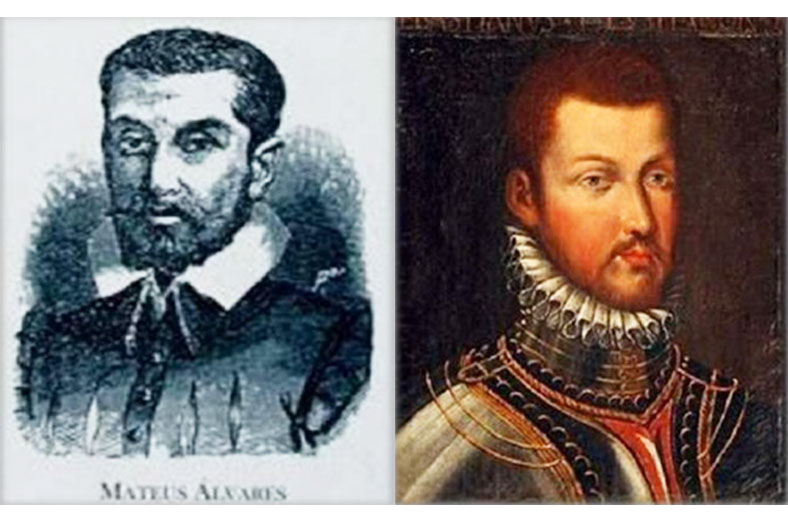
1594, Madrigal, Spain. Sixteen years after the battle. A new baker arrives in town travelling with a wife and a two-year-old daughter. People become intrigued when he shows rare qualities for a baker such as speaking multiple languages and fine horse-riding skills. He proclaims to be Sebastian and gathers supporters, notably a friar who’d been confessor in Sebastian’s court and Mary Anne of Austria the grand-daugther the Holy Roman Emperor (Charles V). The Pretender and the friar are arrested and tortured for defaming the Spanish king. The friar is hanged in Madrid’s main square. The Prentender is hanged and quartered in Valladolid, each limb suspended over one of the 4 great gates of the city, his head nailed to the façade of the Town Hall.
1598, Venice, Italy 20 years after the battle. Aforementioned.
1632, Tomar, Portugal. 54 years after the battle. A pilgrim coming from Jerusalem arrives in the city and sparks rumours due to certain behaviours and physical similarities with Sebastian. He leaves, and lives.
Pretenders came and Pretenders went, but the hope for a return remained. To save the nation from the cultural rape by the invader.
And that hope lives to this day.
End of Part 2
Part 3 (Final)
Chapter XIX – The returns of Sebastianism
SEBASTIÃO, WHERE ARE YOU?
As time went by, the expectation that Sebastian would return increasingly conflicted with statistical human life expectancy. In other words, the longer it passed the more probable he was dead…hence the less likely his return. Already in the days of the Pretender of Tomar, Sebastian would have been 78 years old.
But, on what date exactly was that final glimmer of hope supposed to be extinguished? On Sebastian’s 80th? On his 90th? Should all Sebastianists gather on his 100th birthday and agree to hope no more? Isn’t the precise moment of our final breath as uncertain as the certainty of death itself? How far can statistics lead us (astray)?
As long as Sebastian was not proved dead, then Sebastianism lives.
How many myths have been believed but never proven?
Dear read, at this point you may find that we find ourselves entering a liminal space that leads into another realm. A point of equilibria, of inversion, it’s in this twilight zone that the heart of Sebastianism lives. Where mist becomes the strongest evidence of life, what can we find at the frontier between rationality and imagination…mist? What can we see from atop the great white wall surrounding the realm…more mist?
If all is One, what can we learn from the Oneness of the edge?
Or, to put it in another of the endless forms it can be stated, there is no Sebastianism without hope, no hope without questioning and no questioning without imagination. It follows that Sebastianism will terminate when the human ability to imagine…dies, when the human ability to question dies, when the human ability to hope dies. For now, they live, not least in the paintings of Sam Abercromby.
And so they kept hoping…in 1809 (Napoleonic Invasions)…1835 (Pernambuco Massacre)…1934 (The Message)…1535 (Bandarra’s prophecy, prenatal)…today…
What is Sebastianism?
Chapter X
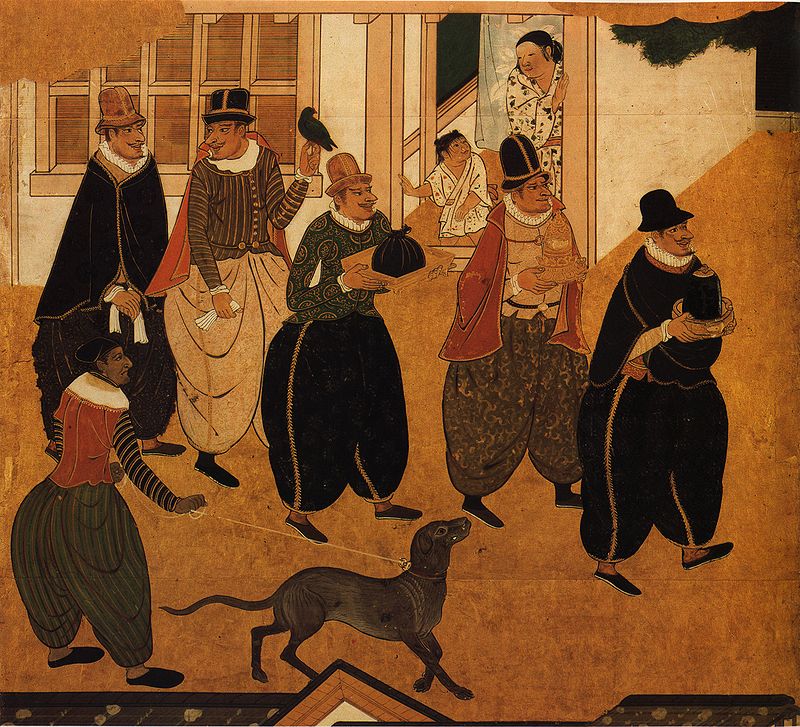
Sebastianism can be felt and it can be hoped. It can most certainly be transmitted as it was so all over the world. Travelling on the trails of Portugal’s global ex-empire, Sebastianism in one way or another reached the 4 corners of the earth. One can find it in the Amazon, on Brazilian islands, in old Indian towns, on Africa’s East and West Coasts, in Ethiopia…
Can Sebastianism kill? It most certainly has, perhaps even its own protagonist. But Sebastianism can also inspire, resurrect, awaken…
Is Sebastianism a myth?
Is Sebastianism a prophecy?
Is Sebastianism a religion?
If we take religion as unorganized system of beliefs, perhaps. The Greek word systema indicates a whole composed of parts. Can we have a whole composed of one part? Following this word’s root trail we get to the meanings “stand” and “together”…something tells me we´re going in the right direction.
Taking the word religion in it’s original sense of re-ligare – re-connect – Sebastianism is religion, yes! But what does it reconnect us too? Reconnection can only happen when connection was lost. And what have we lost connection with?
What does Sebastianism reconnect Sam Abercromby with? We may postulate that it reconnected him with Portugal, if we accept that someone who was born in the desert of North-Western Australia may have been connected to a place on the other side of the world, somehow, sometime in the past. Sebastianism reconnected him to the Artist. It reconnected him to Sebastian. It reconnected him to the World, to humanity, to himself.
Through these (re)connections information flows which ends up on a concoction of linseed oil, powdered pigments, wax, etc. placed on wooden panels by hands, fingers and brushes.
Can the result connect others to Portugal, to the World, themselves?
Where does Sebastianism fit in the middle of all of this?
It can’t really be explained you see…
David Rebelo, B. A. (Cantab)
Vila do Paço, September 10th 2023